
Asphalt Before Education:
A Developmental Lag Between Hunza and Ghizer
Write: Schatz
It takes less than two hours, with no major pain in any part of your body, to reach Aliabad, Hunza, but more than two hours, with gut-wrenching pain in every part of your body (and a head soaked in dust), to reach Ghakuch, Ghizer. The result? A generational lag, both socially and economically, between the two districts.
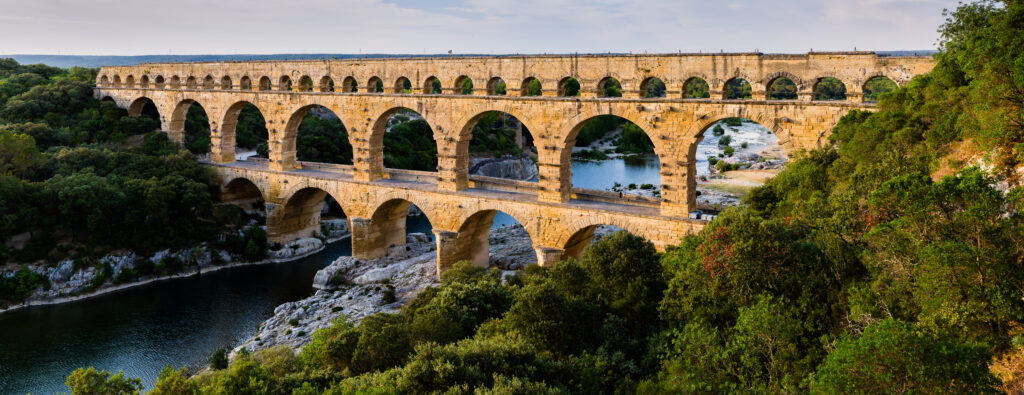
Long before the discovery of Asphalt, the core ingredient for the modern-day roads, in the heart of Vicontii, modern-day Drôme, the only place to come to a formal alliance with the Roman Empire under Caesar’s rule, a connectome was built with five major roads across the region. No empire in the history of mankind invested more in building roads than the Romans.
It was because the Romans knew the fundamental ingredient of a prosperous empire: good roads.
Not only was the scale of the roads impressive, but so was their quality. For instance, the French came to call them chemin de César or chemin du Diable: only Caesar or the devil could build roads capable of lasting so long. For the people of Drôme, this connectome built by the Romans helped them excel both socially and economically.
“Only Caesar or the devil could build roads capable of lasting so long.”
But after the Roman Empire the roads were not taken good care of. Eventually, the roads which were once called indestructible started to erode.
That is why when one traces Vicontii’s history to the eighteenth century, the very place once known as the prosperous region of France came to be called the wasteland and the desolate region of France. What accounts for such a difference between the Roman period and the late eighteenth century? “The answer is simple,” writes Hitchner, an American archaeologist, “good quality roads.”
“Good quality roads.”
The same is the case with Ghizer. For decades, this region of Gilgit-Baltistan has been desolated and neglected. On the other hand, its neighbor, Hunza, enjoys the benefits of a stronger economy and better social structures.
One can simply say that to this day, Hunza remains a region far better off than Ghizer. And one needs no statistics to prove that a single twelve-day trip to Ghizer will do the math for you.
“One can simply say that to this day, Hunza remains a region far better off than Ghizer.”
But the question still lingers: why did Hunza excel economically and socially (by socially I mean the maintained infrastructure, gender equality and job opportunities) more than Ghizer, or any other region of Gilgit-Baltistan for that matter? The answer is again simple: good roads.
The Roman Empire itself would not have reached the heights it did without its essential ingredient: good and well-maintained roads.
You see, before the KKH was laid through the heart of Hunza, it was a desolate and economically poor region. But, as Hitchner mentions in the case of Vicontii, “the region’s poverty and underdevelopment were due to the absence of such high-quality roads.” When the KKH got constructed across Hunza, many institutions started to invest in the region’s economy.
If one thing has not changed in the history of mankind, it is this: a less isolated region is always more likely to excel economically and socially than a region cut off from the outer world.
The government, Ghizer, and its people must know that without good roads, investment by any institution or industry will result in negative returns. Most importantly, the region cannot develop a capitalistic backbone, and without that backbone the small-scale industries, the educational and agricultural sectors will be affected.
Because the new globalization demands a well-maintained and structured communication for a region to witness development.
Yes, the government is building what it called the Ghizer Expressway, but when one travels along the road, one realizes, or rather, is shocked, that many sections have been built without considering the rising river levels. One sees bends running at almost the same level as the river.
Apart from all this, and the questions about whether the expressway will solve the problem for Ghizer or not, during my twelve-day stay in Ghizer, I saw one thing that is even harder to find in Hunza: the amount of potential the youth embody. Put the statistics on the table and see which region’s youth in Gilgit-Baltistan scores higher when it comes to admissions to the top universities of Pakistan. Whatever the count of other regions, you will find Ghizer on the top.
“Put the statistics on the table and see which region’s youth in Gilgit-Baltistan scores higher when it comes to admissions to the top universities of Pakistan.”
Hunza might be filled with resources that Ghizer lacks, but its youth somehow are not willing to or is not sufficiently equipped to utilize them as they should be. Ghizer has tremendous potential; what it needs are resources and a stronger connection with the outside world to improve the region’s economic condition. Because only a good economical backbone can give rise to a potential yet to excel in a capitalistic society.
“Ghizer has tremendous potential; what it needs are resources and a stronger connection with the outside world to improve the region’s economic condition.”
I saw hope in the eyes of the people of Ghizer—a hope that rests on the completion of the Ghizer Expressway. If it is completed within the time frame the government promises, it will not only be good for the region but for the rest of Gilgit-Baltistan as well. But if this region continues to remain neglected, one cannot stop the fate of Ghizer inevitably to be that of eighteenth-century Vicontii.